Saturday, June 12, 2010

On the Quest for the Perfect Tuscan

For a wine lover like myself, visiting a region like Tuscany always presents a great challenge; finding the wine which really captures me during my stay there. Last year during my visit in March, I visited a number of wineries with my friend Franco Traversi, a true Tuscan wine connoisseur. He took me to some incredible producers which till now represent my favourite in this diverse wine region. Rave wines from last year’s visit include San Giusto a Rentennano Percarlo, Monteraponi’s Chianti Classico, Stella di Campalto’s Rosso di Montalcino, Pian del Orino’s Brunello di Montalcino and other great producers from Bolgheri area like Tua Rita and Le Macchiole.


So last week, apart for my main reason to visit Tuscany which for now I leave secretly undisclosed, :) I again took the opportunity to visit some wineries. The total number of visits by Saturday was up to 5, the total of number wine tasted throughout the week was enough to make me crave for some cool refreshing beer by Saturday evening. :) On this note I must say that for wine lovers like myself beer is a beverage that is truly appreciated especially during a week of great wine tastings.


First winery visited during the week was the very well-known winery of Dievole in Vagliagli. This winery is one of the few in Tuscany which really pushed its way through the modern marketing tools like Facebook and Twitter; tools that are yet undiscovered by many Tuscan and even Italian wineries, and we may also include the French producers here. The first reason for my visit to Dievole, was hunger followed by wine. The Chianti Classico is dotted with small osterias and trattorias where one can enjoy a lovely lunch yet that day I had enough time to make my way to a winery and taste both their food and wine. I must admit that the hospitality at Dievole was remarkable and very well-prepared. The food was mainly a nice carpaccio followed by a massive and tasty plate of pici al ragu. Wines to match were their white wine Bianco di Malvagia from Malvasia and Trebbiano; even though white wines from Tuscany are in my opinion of limited quality and only a few blow away my senses, this wine was an easy drinking aromatic wine enjoyable during a hot summer’s day. The second wine served with my pasta was the Certosa Chianti Classico which is a joint venture wine produced with the University of Siena; this wine is easy drinking with no complexities or aromas you fall in love with yet good quality and matching very well the juicy pici . After my lunch I had the opportunity to visit their cellars and taste their Chianti Classico Broccato, Chianti Classico Riserva Novecento and their Vin Santo. Both Chiantis in my opinion have strong tannins coming from barrique ageing which is not what I really look for in a Chianti. Will these tannins integrate better with age leaving the palate softer and more balanced? Guess I need to taste these same wines in a couple of years to make my judgement, all rise!


Another dynamic and evolving winery I visited last week was the Tolaini Estate which is found on the gentle rolling hills of Castelnuovo Berardenga. Diego Donato, the young talented oenologist over seeing the estate gave me a really good tour of the vineyards which are planted with both international grape varieties like Cabernet Sauvignon, Cabernet Franc and Petit Verdot and also with the indigenous grape Sangiovese. A tour which yes ended up with a tasting yet which was brought to a halt by a punctured tyre in our car in the middle of the vineyards; not so bad given the sun, vines and company. The wines of this estate are atypical for the region of the Chianti Classico. My favourite was Al Passo made of 85% Sangiovese and 15% Merlot, whose aromas are very compelling with cherry notes, prunes and spice. The Picconero and the Valdisanti are mostly composed of international grape varieties and have a French twist to them; oh did I mention that the consultant oenologist is Michel Rolland?! His fingerprints are all over. :)


Next on my list was Isola e Olena, a winery which was suggested by a friend who recently tasted their wines at the Decanter Italian Wine Tasting in London. What makes me fall in love with this region over and over again are the magnificent sceneries you discover after making your way through an endless curvy road, praying you won’t have car problems here since you know that even your GPS signal is weak let alone your mobile phone reception. When you arrive at the winery of Isola e Olena, you think to yourself, wow... I am so lucky to have a passion for wine.. it brings me to this.. a tapestry of greenery... undulating vineyards; olive trees and cypress trees dancing with the light wind, then the darker green forest on the background against the bluest of skies.. To top it all I was greeted by this lovely woman, owner of the winery, Martha de Marchi. Her husband’s family originally cultivating vineyards in Piedmont, bought this winery and surrounding vineyards in the 1950s and through research and hard work is now producing some stunning wines. The Ceparello 2004 was truly a gem; the aromas of ripe cherries and prunes intermingling with earthy and forest floor nuances make you wish to stop time and just keep sniffing. The palate was very balanced, with tannins which were very broad on the mouth yet not dusty; just right for a long finish. The other wines tasted including the Isola e Olena Chianti Classico and their Vin Santo, both show really great quality and wine making skills yet difficult to beat their brother Ceparello.


Bbbbbrrrrr Brancaia was the next winery I visited. A winery introduced to me by another wine friend a number of years back. Another Italian winery owned by non-Italians, once again giving a modernist approach to a traditional region like Tuscany. Work both in the cellar and vineyards is very meticulous with high density plantings and lutte raisonnée viticulture put into practise. As expected, given their modernist approach, the recipe for their wines mainly includes international grape varieties like Cabernet Sauvignon, Merlot and Petit Verdot. By now you would ask, but what’s wrong with such grape varieties? Why is Berenice so hard to please? Surely there is nothing wrong with Cab and Merlot wines and surely yes I am hard to please. :) In my opinion wines should represent the region, area, piece of dirt they are coming from and to do this I believe that only indigenous grape varieties can reflect this. By all means I cannot deny that the Ilatraia and the Blu tasted at Brancaia are awesome wines which I am willing to drink and taste on a frequent basis yet it’s totally different from when you are discovering a true Sangiovese, a distinctive Nebbiolo or even a pleasing Gamay. Back to this tasting, Blu will always be amongst my favourite Bordeaux blends in the area. The grapes for this wine are mainly grown in the Maremma area which gives lovely ripe fruit notes on nose and palate; tannins are also ripe with dusty hints that support very well the alcohol and broadness of this wine.


Last but not least and from a completely different area altogether I visited Cantina Dei in Montepulciano. When the going gets rough I like to trace some imprints stored at the back of my mind and one of my favourites is the view one can admire from the belvedere hidden on the edge of the tiny village of Montepulciano; it makes anyone’s frown turn into a smile! :) At Cantina Dei I was welcomed by Catherina Dei herself who is currently running the winery with the help of her omnipresent father. The tour in the cantina followed the usual trail until she introduced me to their new project; a new cellar in an oyster shell form cut into the ground. Still under construction, using my “creative” brain I could imagine this future realm; a mix between old and new; the smell of wine filling up the empty spaces and yes the beautiful music by Catherina herself accompanying wine through its maturing journey. My favourite wine her was the typical Vino Nobile di Montepulciano made from the Sangiovese clone, Prugnolo, enticing both on the nose and palate. I don’t really like to describe wines according to gender but this wine genuinely has a female touch; silky tannins, nice acidity and succulent fruit all branching to a long persistence.


Have I found the perfect Tuscan? Who am I really to judge perfect or imperfect? Each wine, each wine maker has a story of its own to tell, discovering each and every one of them is what keeps me going on, what keeps my thirst and dreams alive!

Sunday, June 6, 2010

Unwinding through the Winding Roads of Tuscany!

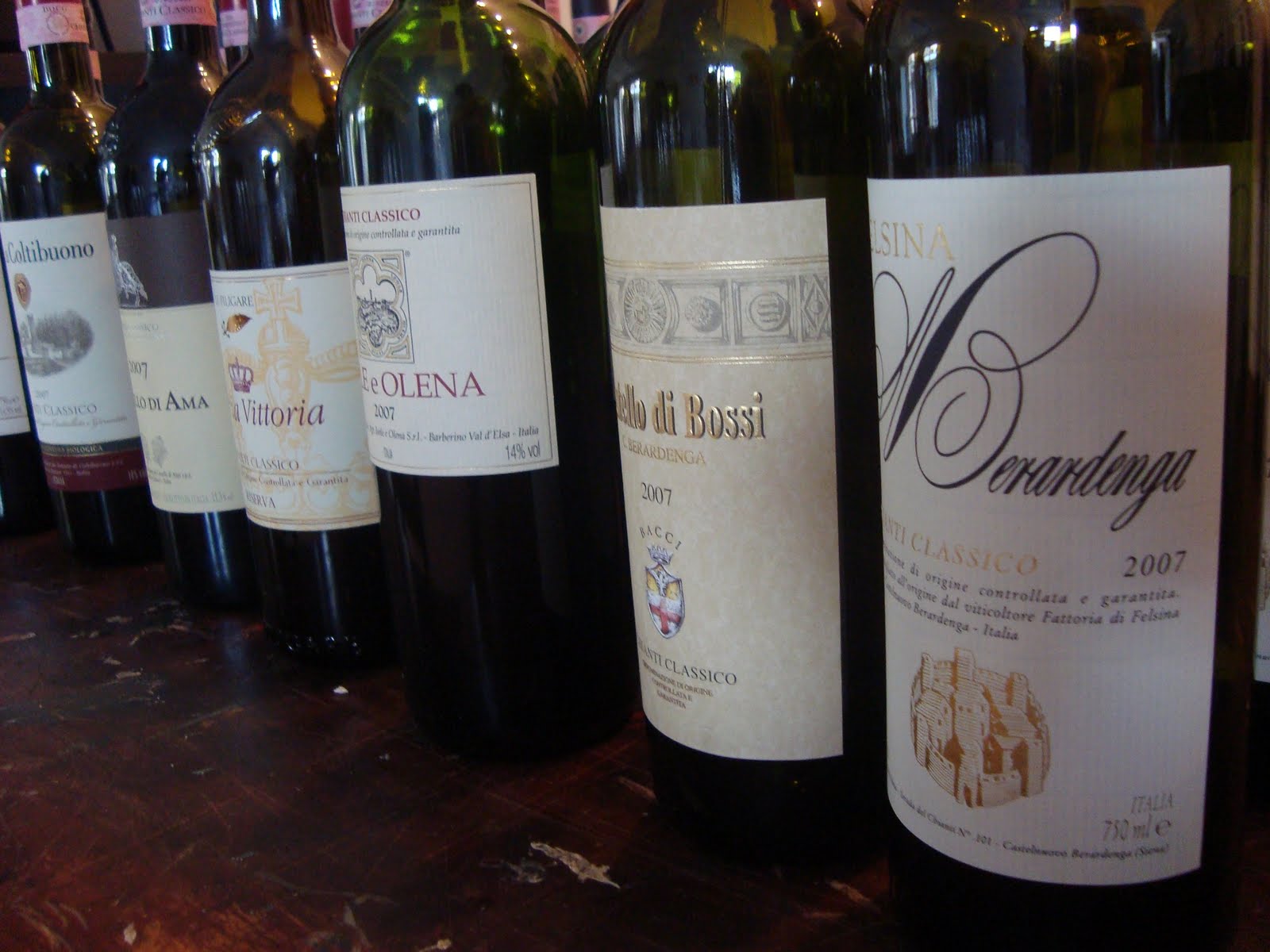
After 10 hours of night train sleeping in on a hard sofa bed, then complications to rent a car without GPS, and getting lost in Florence in search of my apartment I finally made it to Greve in Chianti were I attended a tasting for 2007 Chianti Classico wines from different areas in Chianti showing different terroir characteristics. For many the word terroir doesn’t really mean anything, others understand it but its not the sole factor behind a label, for others it makes a really big difference. Terroir as many books might define it makes up a blend of different aspects around wine. Terroir is mainly the soil, grape variety, aspect of vineryard, climatic conditions and the different appellations of the region. It is ultimately the skill of the winemaker to interpret the different aspects of terroir in the wine he produces. Some winemakers might consider this unrelevant and just produce a style of wine the consumer ultimately demands.


But now back to Tuscany. For me Tucany represents the epitome of beauty. I admit that Burgundy has a mystical richness that no other region has yet Tuscany is a wine lovers dream. The winding roads of the beautiful Strada del Chianti unwind you as you drive through them. The wines of this region vary according to grape variety and ohhh yes terroir. You can taste Chianti, Rosso di Montalcino, Brunello, Rosso di Montepulciano and Supertuscans all in one day, not mentioning any whites.


Well, surely what Tuscany has in common with Burgundy is the characterisitics of their red grape varieties; Pinot Noir and Sangiovese. Both light in colour due to low anthocynins; both with good acidity and sapidity; both with lovely cherry, cassis fruit with floral aromas when young which can age really well; both difficult to tame. Most Chianti Classico wines which have a minimum of 80% of Sangiovese need time to develop in the bottle so that all the components in the wine integrate better. This is the same for most red Burgundy wines.


My favourite 3 picks from todays tastings have to be Fontodi, Castello di Ama e Felsina. The Fontondi coming from the.... area had beautiful lavender notes on the nose with undertones of sweet almond liqueur; on the mouth tannins still a bit austere showing that the wine needs time to integrate better. Castello di Ama had the most vibrant colour from all and fruit was more concentrated; cherries and prunes. Mint was very present too on the nose. Tannins covered all the mouth very nicely giving the wine length and persisitance. The Felsina was the most intense in colour and its nose had enticing fruit with noce moscato very present. Even if wine had high alcohol level of 13.5% it was still very elegant and balanced, with a long silky finish.

How did the day end? With a lovely dinner at a friend who was orignally a friend of a friend who I met during the Benvenuto event last February. Well I had some burro di lardo, some pasta with collante di alici and some lovely sfogliate di ricotta da Napoli. Wines of the evening included Les Clos Laherte and Billecart Salmon Rose Champagne, Chardonnay from Valle d’Aosta, a Ribolla Gialla from Gravner and a lovely Recioto di Soave to finish up the dessert.


Well a day which started off not so well surely end with a big bang!! :)

Tuesday, May 25, 2010

Hidden Messages in a Bottle

Most of us have discussed endlessly the issue of cork versus screw cap and other closures. What does cork give that screw cap doesn’t? How to avoid cork taint? How to avoid reduction when choosing the screw cap closure? The story is endless and many producers decided to adopt to change and put all their wines under screw cap whilst others have remained faithful to cork.


Last week at the London International Wine Fair, I attended a seminar on the use of oxygen in wine. This was a very technical seminar with most of the panel being oenologists, yet it took a different perspective towards oxygen in wine and hence ultimately touched on the closure issue. The main debate was how to manage oxygen in wine since ultimately this phenomenon is needed to produce wines and to age them well. One of the speakers, Stephane Vidal, a post bottling oenology specialist described the use of oxygen in wine on three different levels:


1. Macro Oxygenation – the use of oxygen needed for the yeast to kick off fermentation and to keep the yeast population at an optimum level.

2. Micro Oxygenation – this is the exposure of wine to limited quantities of oxygen which can happen either through barrel maturation or through the process of micro oxygenation developed by Patrick DuCournau in 1991. This method is used widely in Bordeaux and consists mainly in the polymerization of tannin into larger molecules, which are then perceived softer on the palate.

3. Nano Oxygenation – this is the oxygen needed for wine to be stored and aged well. Around 1/2mg per year is the ideal amount of oxygen intake to mature wine at its best.


As wine undergoes the various stages of production, less and less oxygen intake is needed by the wine to maintain a balance between the proper use of oxygen and oxygenation which can create faults in wine. So is the oxygen intake from cork closure important for wine? Can the head space used in screw cap closure introduce wine to more oxygen than needed? How does the quality of the cork influence oxygen intake?


Another important and interesting point raised during the presentation by Clemancy Yates, another oenologist, was the issue of bottling. After conducting her studies on bottling lines she concluded that fast paced lines used for the production of bulk wines introduce the wines to much less oxygen intake than slow paced bottling lines used for higher quality and less quantity wines. In her opinion, the advances being made on controlling oxygen intake at the various levels of wine production can lead to wine labels to include a best by date like all products found on supermarket shelves.

Oxygen transmission rate, optical technology, jet systems are all an innovative options given to the winemaker to take control of this phenomenon. Together with closure debates oxygen management is now one of the hottest topics in the wine industry. Poor oxygen management can lead to wine faults; too little oxygen can lead to reduction, it’s up to the puppeteer to manage the best show.

Monday, May 17, 2010

Celebrating the World Cup in Style

Everyone is eager to get in front of the telly to watch their favourite team on the battlefield. The World Cup always has a significant impact even on the lesser zealous football fans. With the 2010 FIFA World Cup Final just around the corner, South Africans have been pulling up their sleeves to prepare for this great event. Cape town Airport has been given a face lift, new stadiums are nearing completion, hotels are being refurbished and roads have been revamped. Yet what is happening within the wine industry? Most would say that it is going through a Tweeting effect. Most wineries are using the most innovative social media tools to market their wine and take advantage of this great event.


Apart from marketing their wines well, South Africans have gone a long way to improve quality in their wine making and to compete even on export markets. Recently, it has been shown that South African wines have overcome French wines on export in the UK. So which wines should one choose to drink in front of the telly whilst supporting your team? South Africa like most New World countries hosts a variety of grape varieties from the well-known Chardonnay and Cabernet Sauvignon to more interesting and expressive Pinotage. This latter grape variety is a hybrid of Pinot Noir and Cinsaut (Hermitage), which more recently has been cultivated successfully in South Africa. Apart from the wide range of grape varieties planted, terroir is a concept South Africans are very sensitive too. At a recent seminar in Prowein, a South African producer explained how the Atlantic and Indian oceans give maritime influences and a cooling effect which result in a Mediterranean climate in regions like Stellenbosch, whilst a continental climate prevails in the inner regions of South Arica like in Worchester Region.


So which wines to enjoy easily this summer whilst supporting your squad? I would go for the following 3 easy drinking wines enjoyable any time of the day.

Chenin Blanc – Chenin Blanc also referred to as Steen in South Africa can produce very refreshing and light wines. This grape shows strong guava, tropical, herbaceous aromas which are nicely complimented with a long clean, crisp aftertaste.

Pinotage Rose – Rose wines are both trendy and very easy drinking wines. This style of wine can have an attractive pale strawberry appearance and the nose shows exuberant fresh candy with hints of flower blossoms. Off-dry, best enjoyed with chicken salads, paella and sweet and sour dishes.

Shiraz/Pinotage – A blend of the well known Shiraz grape and the interesting Pinotage grape described earlier. Smooth, medium bodied with vibrant black fruit, spice and red cherry flavors. Grilled, smoked and spicy foods are traditional favorites with this style.


http://www.thefoodie.com.mt/

Tuesday, May 4, 2010

The Glacial Saints bring the Winds of Change

As I clicked on my automatic blinds this morning at 7am, I was hoping for some sun to surprise my still peeping eyes yet to my dismay all that welcomed me was grey skies and ghastly cold winds; the trees in the garden opposite where possessed by Wagners’ Ride of the Valkyries. Out of time as usual for the early class on viticulture I just put on a few layers of clothes and my leather jacket. As soon as I stepped out of my 15 square metre cosy, warm studio flat I realised I had put toofew layers but it was too late now.

During our viticulture class whilst covering the various seasons and viticultural practices on the vine, our proficient professor Claude Chapuis pointed out that in the middle of May, just after a few days of sunshine when you finally start putting your short sleeves on and getting hints of tan, the Glacial saints make a visit to France. You might ask? What kind of saints are these? Or better was Berenice struck by brain freeze? Maybe not as yet. :) Well, for those Christians out there, this is easier to understand. In the quest to eliminate superstition around the 1960s, the Vatican introduced saints to all the days of the calendar and guess what! The Glacial Saints of Saints Mamert, Pancrace and Servais fall on the 11th, 12th and 13th of May respectively. This year it seems that they paid their visit earlier than usual, around a week in advance.


By now you should be asking, but why did Claude Chapuis bring up all this during viticulture class? Well, during this period winemakers would be praying all the other Saints on the calendar to limit frost damage on their yearly crop. Spring frosts are a problem in all the major wine producing regions of France from Champagne to Loire to Burgundy because they can cause severe damage to the buds which burst only a few weeks ago. The vines on the plains and the lower foothills are the most prone to spring frost, whilst the hill slopes, having the surface-chilled air, will drain more easily.


Apart from high trellis systems there are a number of ways to combat this mishap of nature. Smudge pots are fairly popular especially in Champagne. Whilst visiting a few weeks ago some wise winemakers were already spreading these pots across their vineyards in preparation for the blessed Saints. Smudge pots create warm blankets of air which protect the buds from frost. Other forms of protection against frost are wind machines which help circulate the warm air from above, keeping ground level above freezing point. Another efficient and widely used method is the aspersion system where sprinklers are used to spray the vineyards with water insulating the shoots, therefore protecting them from frost.


Well let’s hope these Saints don’t curse the Burgundian vines but bless them instead! We are all looking forward to more sun, less layers of clothes and hopefully some more skin tan which I surely miss after so many months away from the Rock!

Wednesday, April 28, 2010

Terres et Vins de Champagne

My visit to Champagne was mainly focused around the tasting held on Monday 19th April, Terres et Vins de Champagne. I didn’t really understand the concept of this tasting until I stepped into the Castel Jeanson in Ay. Held once a year this tasting was born out of a genuine desire to share passion for authentic Champagne wines. 17 producers bring together both their Vins Clairs, that is, their base wine from 2009 vintage and other Champagnes from different vintages.


It was my first time ever to taste base wine, and I soon realised how this can give you a clear indication of how the final style of the champagne will be. It was extremely interesting to compare the vin clairs with the champagne; minerality found in one would also be present in the other, austere acidity in one would also be the end result in the final Champagne. What was also very interesting to see and understand was the change in style from father to son or daughter. Most of the producers were represented by two generations and the styles of the wines were distinctive according to which one produced it. The main idea behind this tasting is the focus on terroir in Champagne. Unfortunately, Champagne is mostly associated with blends of different areas and therefore of different soils which doesn’t give a clear terroir identity. Whilst these 17 producers try to keep the connection with soil and terroir as much as possible; 30 different soils being represented in this tasting.

The brains behind this project are Berec and his friend Aurélien Laherte of Laherte Frères who brought together not only 17 high quality producers but also different areas of Champagne, again to bring forward the diversity of terrior. The stars of the day were: Pascal Agrapart, Françoise Bedel, Raphaël Bereche, Francis Boulard (Raymond Boulard), Alexandre Chartogne (Chartogne-Taillet), Couche Vincent, Pascal Doquet, Jean-Baptiste Geoffroy (René Geoffroy), Etienne Goutorbe (Henri Goutorbe), Cyril Jeaunaux (Jeaunaux-Robin), Benoît Lahaye, Aurélien Laherte, David Léclapart, Franck Pascal, Olivier Paulet (Hubert Paulet) Fabrice Pouillon and Benoît Tarlant.

From these great producers one cannot pick favourites, yet I feel that producers like Pascal Agrapart, Pascal Doquet, Franck Pascal and the famous Benoît Tarlant, need a special mention. Pascal Agrapart’s wines come from 3 different terroirs from the same village of Avize. Venus, named after his horse which he uses for ploughing his soils, is one of the most mineral and delicate Champagnes I ever tasted. A remarkable point made by Pascal was that he uses cork not a bidule as his bottles are ageing sur latte, because this gives a delicate ageing edge to his wines.


Situated in Vertus and producing bio wines since 2003, Pascal Doquet’s Le Mensil Champagne coming from the Grand Cru Le Mensil-sur-Oger in the Cote de Blancs, has a unique nose of mature fruit, toasty aromas and an almond elegant finish.

Franck Pascal, a great Champagne producer we met in Prowein will be one of my all time favourites. His Brut Nature Sagesse made from 57% Pinot Meunier, 38% Pinot Noir and 5% Chardonnay, has a very vibrant lively nose with great acidity on the palate. Indeed only a man with Wisdom (Sagesse) like Franck can translate terroir characteristics so uniquely into his wines.


Last but not least, actually I think the most well-known of the 17 producers¸ Benoît Tarlant. From the heart of the village of Oeuilly, just bordering the river Marne, Tarlant has been producing Champagne since 1687. Introducing Cuvee Louis Extra Brut from his vineyard in Les Crayons, Benoit told us he calls this Champagne the river wine. The river which helps keep the grapes cool giving highly concentrated fruit yet a pure and delicate nose with crisp acidity; all feature in this lovely champagne. A 50/50 blend of Chardonnay and Pinot Noir from 60-year-old vines, based primarily on the 1998 harvest with reserve wines from both 1997 and 1996.


Well, after I posted my photos from Champagne on my Facebook page, one of my friends told me, “I think you're in heaven!!” and I cannot possibly disagree. Yet Champagne has been only one of the heavenly regions I visited lately. I hope to discover more in the near future.

Wednesday, April 21, 2010

Bubbly lady

After a 3 hour drive to Champagne, myself, the Maltese importer and the Russian Champagne lover, were all looking forward to taste some bubbly. Thanking our Sicilian friend Luca for organising the visiting to Corbon; who eventually didn’t make it to Champagne due to a certain volcano in distant Iceland, we hurriedly checked in at our guest house and made our way to the tasting. After a few minutes browsing the streets of Avize our treasure hunt finally led us to Agnes Corbon, a lady in her mid 30s with a twist of British accent who was to be our introduction to the Champagne region and to our great weekend there.


Agnes firstly introduced us to the recipe used by the 5000 cooks in Champagne. The various cepages used, pressing methods, explaining how the cuvee, the tailles and the various vintages are used in the art of assemblage. Then she took us down to their cellars were she explained how she is changing the methods in the cellars by introducing barrel fermentation, a different vision from her dad’s which wasn’t easy to introduce. Her dad also took the time to demonstrate degorgement by hand, a method he used before machinery was introduced in their cellars. It was thrilling to get to know such a man where experience isn’t written in CVs yet on the palm of his hand and carved in his warm smile.


Tasting champagne, oh yes we got to do that too. First we started off with Absolument Brut; this champagne has it biggest % age of base wine coming from the 2002 vintage. 60% Chardonnay, 25% Pinot Noir and 15% Pinot Meunier, this wine has a lovely floral and light fruity bouquet, with nice balanced acidity on the palate. Next up was the Prestige Champagne, this time a blend of 50% Chardonnay, 25% Pinot Noir and 25% Pinot Meunier. Here what struck me was the burnt toasty aromas on the nose. The Vintage 2000 made from 100% Chardonnay from Avize (Cotes de Blanc) only disgorged a few months ago had lovely creamy bubbles on the palate with fresh acidity and long toasty finish. Finally, saving the best for last, we tasted the Brut D’Autrefois which, drum rolls, comes for a solera system just like in Jerez for Sherry production. The wines are an assemblage of various vintages since 1989 and every year a percentage of the cuvee is added to the reserve wine keeping a good blend between the different vintages. This reserve wine is a blend of 80% Chardonnay and 20% Pinot Noir. The final wine is a floral, delicate and elegant wine with a round long persistence on the palate. A really complex inviting Champagne.


With the bubbles kicking in and the warm atmosphere in the living room, it was just the right time to ask some questions, both of a personal and a political nature. What do you (Agnes) think of the expansion rules in Champagne? From the look in her face, it was clear that she had made up her opinion and she was against this new move in Champagne. According to her it’s not economically viable to expand further and therefore produce more, with sales of champagne already dropping due to recession. More production would increase the crisis for producers in champagne. She also explained how the commission has ruled out certain areas for production in Germaine and other northerly areas of Montagne de Reims due the cold severe temperatures there, but might these vineyards be more productive in the near future due to global warming? She also explained that rumours also have it that the big players are buying land around Champagne hoping that this land will be introduced in the appellation. Like everywhere else it seems politics play a very interesting role. LVMH being the biggest player issued invoices to their vigernons in January, a month later than usual, just to have good looking accounts at the end of the year (2009) in the hope of selling their important label Moet. Yet, Agnes also recognised the importance of such players in the market, without their constant advertising Champagne wouldn’t be so well-known world-wide.


The personal question; why did you leave your winery 6 years ago and what brought you back? Agnes explained that like Antz the movie, she was the ant who sought something different, she wanted to experience more than the region of Champagne so she travelled and worked in different countries, yet when she became a mother she realised the importance of her roots, her sense of place so she retraced her way back to Avize and took over her father’s work. Indeed, a great continuation with passion for this bubbly has always been the focal point of this family-owned Champagne house and Agnes will make sure it always shall be.